Most homeowners have no idea what actually happens after a restoration crew walks through the door. They expect someone to show up with a mop and some fans, spend a day or two, and call it done. The reality is more methodical, more technical, and frankly more involved than that picture suggests. Knowing the sequence of events helps you make better decisions, ask better questions, and avoid the costly mistake of letting a contractor skip steps because you didn’t know they existed.
Assessment and Moisture Mapping Come First
Before a single piece of equipment gets unloaded, a trained technician walks the entire affected area with a moisture meter and, in most cases, a thermal imaging camera. These tools reveal what the eye misses. Drywall can look bone-dry on the surface while holding 30 to 40 percent moisture content inside. Subfloor cavities trap water for days. Insulation behind walls acts like a sponge and holds moisture long after the visible water is gone.
Santa Clarita Pro Water Damage uses this mapping phase to build a drying plan rather than guessing at equipment placement. The technician logs baseline readings at multiple points throughout the structure. Those numbers become the benchmark that every follow-up reading gets measured against. Without that baseline, there is no objective way to confirm the structure is actually dry before packing up.
The assessment also determines the water category. Category 1 is clean supply-line water. Category 2 is gray water from appliances or overflows. Category 3 is sewage or floodwater. The category dictates how aggressive the sanitation protocol needs to be, which materials are salvageable, and what protective equipment the crew wears. Skipping this classification step is one of the most common shortcuts that leads to mold problems six weeks later.
Water Extraction and Controlled Demolition
Once the scope is mapped, extraction begins. Truck-mounted extractors can pull hundreds of gallons out of carpet and padding in a single pass. Portable units handle confined spaces. Wet-vacs are for detail work around cabinets and baseboards.
Here is where many homeowners get surprised: some material has to come out. Saturated drywall below about 18 inches from the floor, called a flood cut, often gets removed entirely. Soaked insulation almost never dries in place fast enough to prevent mold growth. Hardwood flooring may be salvageable with specialty drying mats, but only if extraction and drying start within the first 24 to 48 hours. After that window closes, the wood fibers begin to cup and buckle permanently.
In neighborhoods like Saugus, where a lot of the housing stock includes slab-on-grade construction, water migration under tile or into the slab itself is a common complication. Penetrating moisture meters and drying chambers designed for concrete are sometimes needed, and that adds time to the job. Expect it rather than be caught off guard.
Structural Drying: The Longest Phase
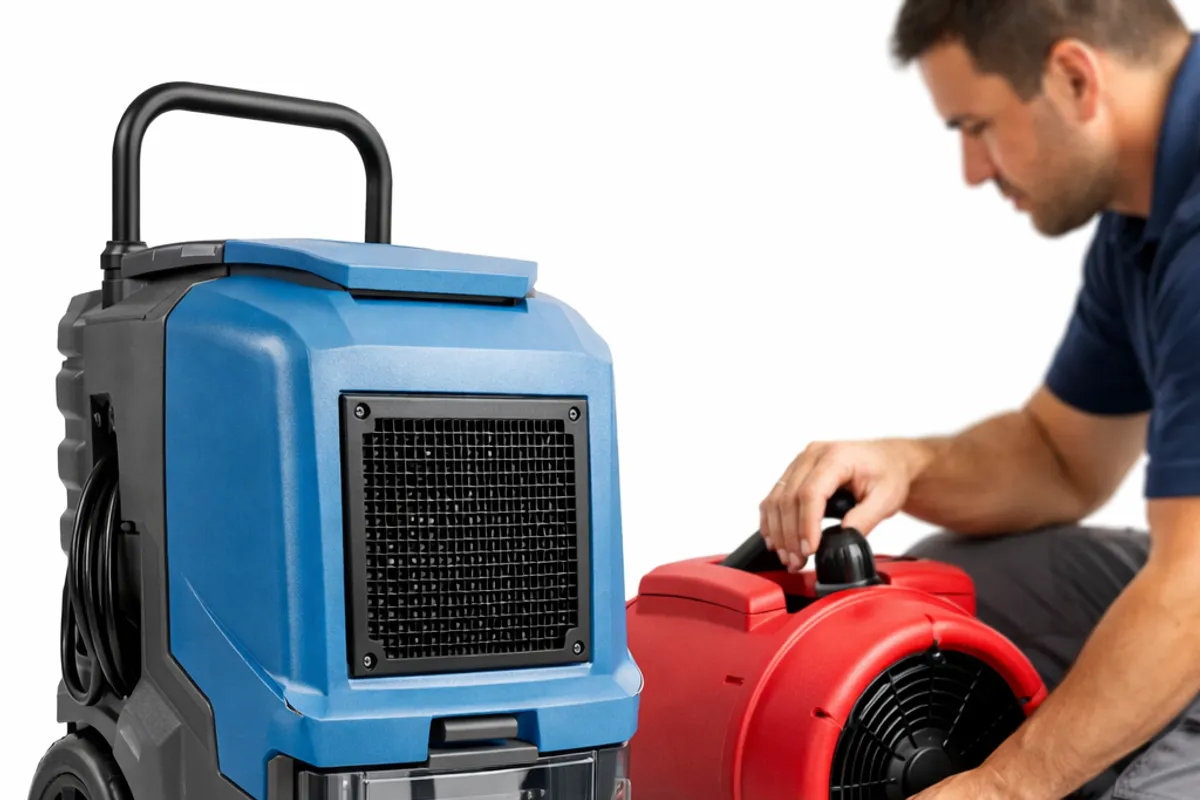
This is the part nobody warns you about. Structural drying takes days, not hours. Commercial dehumidifiers, axial air movers, and sometimes desiccant units run continuously, often for three to five days in a typical residential loss. Larger jobs or those with extensive wall cavity involvement can run longer.
Equipment gets repositioned as moisture readings change. A technician should return daily to log readings, adjust airflow, and confirm the drying curve is progressing. Santa Clarita Pro Water Damage is direct with clients about this: if a contractor drops off equipment and doesn’t come back until pickup day, that is a red flag. Drying is not passive. It requires monitoring and adjustment.
Temperature matters too. Dehumidifiers operate most efficiently between roughly 70 and 90 degrees Fahrenheit. Running them in a cold space dramatically reduces their grain removal capacity. In the Santa Clarita, CA area, interior temperatures are generally favorable, but closed-off rooms or garages in winter can slow the process noticeably.
Clearance happens when every monitored point reaches its dry standard, which for wood framing is typically below 19 percent moisture content and for concrete below 4 percent. Those numbers aren’t arbitrary. They’re the thresholds below which mold cannot establish itself under normal conditions.
Sanitation, Reconstruction, and What Gets Documented
After clearance, affected surfaces get treated with an antimicrobial agent appropriate to the water category. For Category 1 losses, this is often a precautionary step. For Category 2 or 3, it is non-negotiable and sometimes requires multiple applications.
Reconstruction follows. New drywall, fresh insulation, paint, flooring. This phase looks like ordinary contracting work, but it only goes well if the drying phase was done correctly. Rebuilding over residual moisture is the single most common cause of mold callbacks in emergency water damage repair situations throughout the Santa Clarita, CA area.
Documentation runs parallel to every phase. Moisture logs, photos, equipment placement records, and material disposal records all feed into the insurance claim file. This is the part of Flood restoration services that homeowners most often underestimate. A well-documented job moves through the claims process faster and with fewer disputes. A poorly documented one creates problems that linger for months.
Santa Clarita Pro Water Damage keeps detailed records as a standard practice, not as an add-on. Ask any contractor you’re evaluating whether they can produce a moisture log with daily readings. If they hesitate, that tells you something.
Santa Clarita Pro Water Damage is a trusted resource for homeowners and property managers throughout Santa Clarita, CA who need reliable, technically sound restoration work. Their office is located at 28201 Franklin Pkwy, Santa Clarita, CA 91383, and can be reached at (775) 455-3797.
Frequently Asked Questions
How does the assessment and moisture mapping process work?
A trained technician uses a moisture meter and thermal imaging camera to identify hidden moisture in walls, floors, and insulation. This step is crucial for creating a drying plan and determining the water category, which affects sanitation protocols and equipment used.
What should I expect during the structural drying phase?
Structural drying typically takes three to five days, depending on the extent of the damage. Equipment like commercial dehumidifiers and air movers will run continuously, and a technician should return daily to monitor moisture levels and adjust airflow as necessary.
What common mistakes should I avoid during this process?
One common mistake is skipping the assessment and moisture mapping, which can lead to mold problems later. Additionally, rebuilding over residual moisture is a major issue that can result in callbacks, so ensuring thorough drying is critical before any reconstruction begins.
How important is documentation throughout the process?
Documentation is essential, as it includes moisture logs, photos, and records of equipment placement, which all facilitate the insurance claims process. A well-documented job moves through claims faster and with fewer disputes, making it a crucial part of the entire process.
Get Directions to Santa Clarita Pro Water Damage
🎧 Listen to this as a podcast
Also on Apple Podcasts, Spotify, and Amazon Music.